

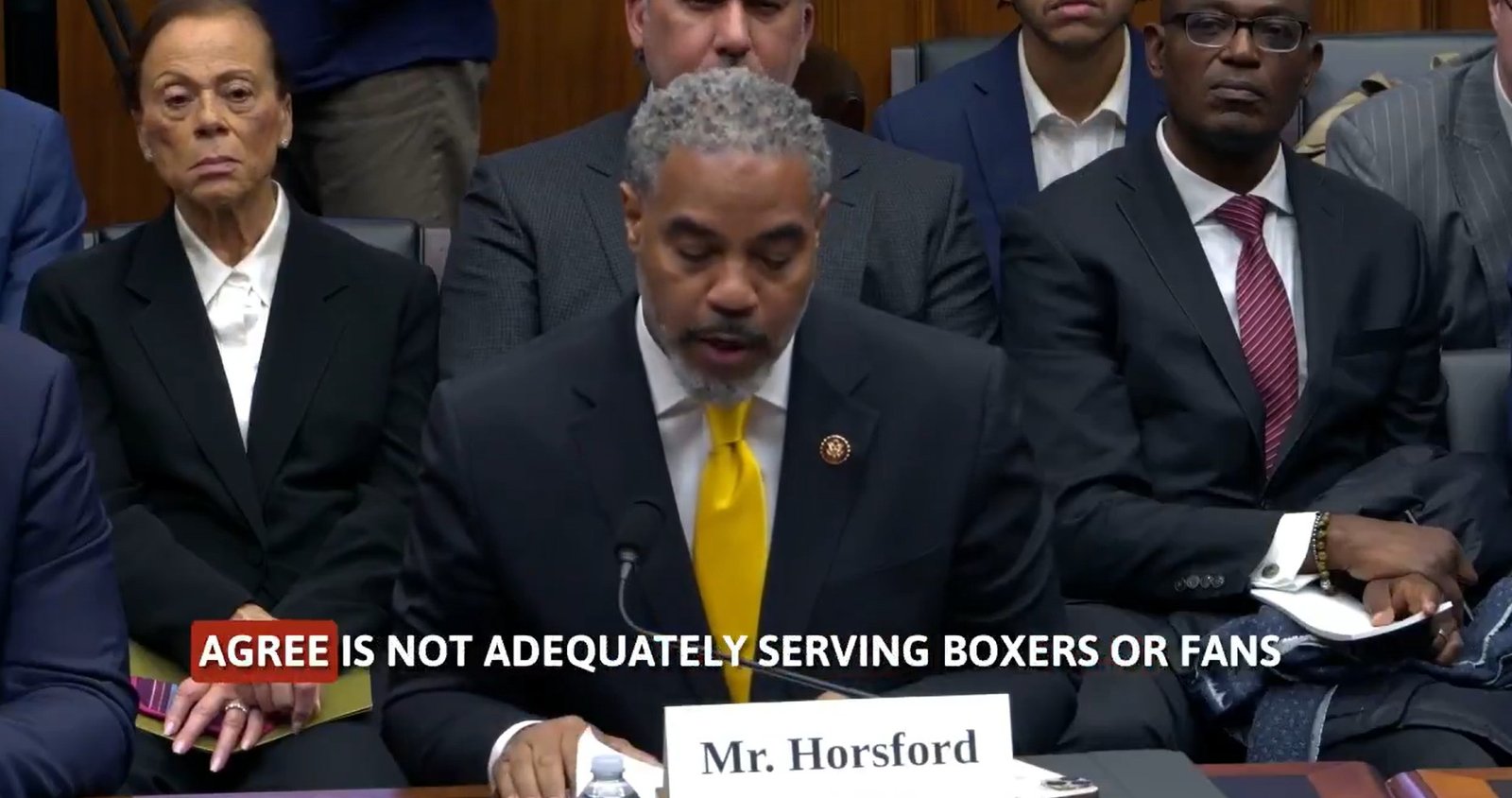
There is much Muhammad Ali American Boxing Revival Act advances in US Congress with amendments at the moment going on.
We see this as a big step forward for the sport and the amendments and changes going through to update the Muhammad Ali Act are great things. For fighters and the sport.
Here’s why.
The Muhammad Ali American Boxing Revival Act has moved ahead in the US Congress. It passed the House Committee on Education and the Workforce on January 21, 2026. The vote came in at 30-4. That shows strong support from both sides. Amendments were added before the vote. Now the bill heads to the full House of Representatives shortly.
The act aims to update old boxing laws. It builds on the Professional Boxing Safety Act of 1996. That law set basic rules for safety and fairness. But times have changed. Boxing needs stronger structures. This new act would create unified boxing organizations. These groups would handle rankings and titles across the sport. No more scattered belts from too many bodies.
We argue this brings order to the chaos that has hurt boxing for years.
Key parts of the bill focus on boxer rights. It sets minimum pay standards. Fighters would get at least $200 per round. That is up from the first draft’s $150. Medical coverage gets a boost too. The minimum jumps to $50,000 per fight. That covers injuries better. Contracts cannot last more than six years. This protects free agency. Boxers can move to new deals without being locked in forever. We argue these rules stop exploitation. They give fighters real power in talks.
The amendments came from committee talks. Rep. Ilhan Omar pushed for the six-year contract limit. She wanted stronger free agency guards. Chairman Tim Walberg added his own changes. These raised the pay and medical floors. All passed by voice vote. Then the full committee backed the amended bill. Only four said no. The rest — 19 Republicans and 11 Democrats — said yes. Three did not vote. This mix proves the act has wide appeal. The above says it all for us. The changes are happening and going through — basically.
Boxing has faced tough times. Low pay and poor safety have driven talent away. Promoters hold too much sway. Fighters often end up broke or hurt. The act names itself after Muhammad Ali for good reason. Ali stood for justice in the ring. He fought for better treatment.
This law honors that legacy. It sets up a system where one main body oversees things. Rankings would be fair. Titles would mean more. We argue this revives American boxing. It makes the sport stronger at home.
Look at the backers. Rep. Brian Jack from Georgia led the charge. He teamed with Rep. Sharice Davids from Kansas. She knows combat sports firsthand. As a former MMA fighter, she gets the risks. TKO Group Holdings supports it too. They own UFC and now push into boxing. Their input shaped the bill. We argue this tie-in brings fresh energy. UFC has built a model that works. Boxing can learn from it.
The act requires unified organizations to register with the government. They must follow strict rules. No conflicts of interest. Transparent rankings. Appeal processes for disputes. Sanctions for breaking rules. This setup mirrors other sports leagues. It protects against fixes and bias. Fighters get a voice in decisions. We argue this levels the field. Small promoters and independents gain from clear guidelines.
A tiny number of critics have spoken up. They say it gives too much power to big groups like TKO. Others worry about over-regulation. Both points are garbage we argue. As the amendments addressed many concerns. The contract limits came from those talks. Pay hikes answered calls for better wages. Medical boosts tackle health risks. The 30-4 vote shows most agree it strikes a balance. We argue the pros outweigh the cons. Boxing needs reform to thrive.
Next steps matter. The bill goes to the House floor. If it passes there, the Senate takes it up. Then to the President for a signature. Timing is key. Congress has other bills in line. But boxing fans push for quick action. Groups like the Association of Boxing Commissions back it. They see it as a win for safety and growth. We argue passage could happen by mid-2026. That sets up real changes soon.
Think about the impact on fighters. Young pros like Shakur Stevenson stand to gain. He just won his fourth weight class title. Under new rules, his path stays clear. No shady rankings. Better pay for all bouts. Veterans get protected too. No endless contracts. More medical help after hard fights. We argue this builds a better future. American boxing leads the world again.
The act also covers judges and refs. They must meet high standards. Training and certification get mandated. This cuts down on bad calls. Fans hate controversial decisions. Unified rules fix that. We argue trust in the sport grows with these steps.
Promoters face new duties. They report finances openly. No hiding behind shells. This stops money games that short fighters. Sanctions hit hard for violations. Fines or bans keep things clean. We argue accountability makes everyone play fair.
Boxing history shows why this matters. Ali’s era had icons but weak structures. Today, stars like Canelo Alvarez shine globally. But US talent needs support. This act invests in that. It funds youth programs through fees on big events. We argue grassroots growth follows.
Opponents claim it stifles freedom. They say market forces should rule. But past failures prove otherwise. Too many belts dilute value. Fighters chase paper titles. The act consolidates them. One champ per weight class per organization. We argue fans love real rivalries. Not endless rematches for fake gold.
The bipartisan vote stands out. In a divided Congress, this unites. Sports transcend politics. Boxing especially. It brings people together. We argue this act does the same for the industry. The amendments must and will go through though.
As it advances, watch for debates. House leaders set the schedule. Amendments could come up again. But momentum is strong. The committee’s work laid a solid base. We argue final passage is the best solution. Nothing can or will stop this Act being updated for the better for boxers and the sport.
In the end, this revives the sweet science. American boxing gets a fresh start.
Fighters win. Fans win. The sport wins. We argue that is the real knockout.
Boxing wins again.
Check out our latest boxing news.