

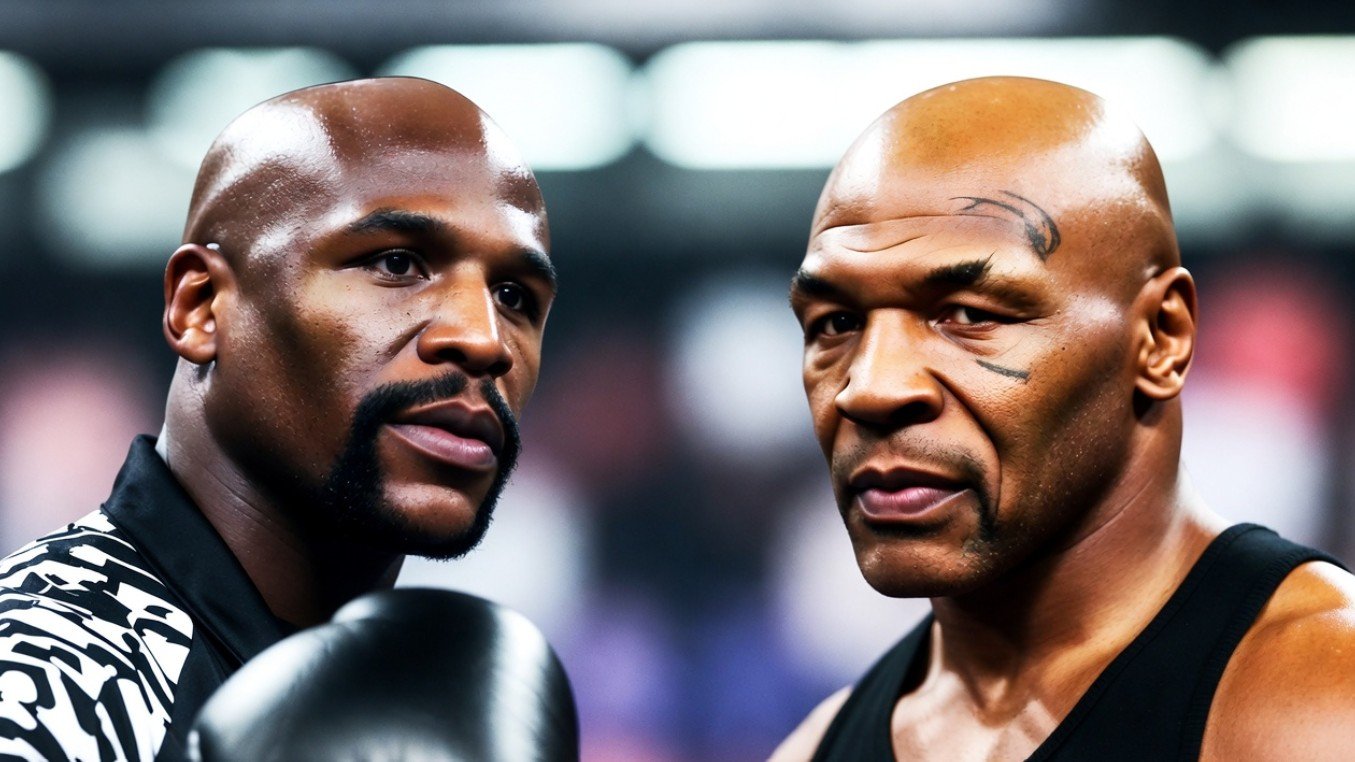
Who made more money in boxing Floyd Mayweather or Mike Tyson?
Listen, when it comes to boxing and money, there are two names that always come up in the conversation – Floyd Mayweather Jr. and Mike Tyson.
These lads didn’t just dominate the ring in their primes; they turned the sport into a cash machine like no one else before or since. But how do their career earnings stack up when you put them side by side?
That’s what this case study is all about – a no-nonsense breakdown of the facts, the figures, the big paydays, and how it all adds up.
No hype, no fluff, just the straight goods on how much they banked from throwing punches for a living. It’s mad how different their paths were: Tyson the ferocious knockout artist who burned bright and fast, Mayweather the defensive master who built an empire slow and steady.
And now, believe it or not, these two legends are due to share the ring in a massive exhibition bout this year, in 2026 – a matchup no one saw coming that could add even more to their already insane earnings. But at the end of the day, it’s the numbers that tell the tale.
Let’s start at the beginning, because to understand the earnings, you have to see how they got going.
Mike Tyson burst onto the scene in 1985 as an 18-year-old phenom, turning pro and racking up knockouts like it was nothing. His early fights weren’t massive money-makers – we’re talking purses in the thousands, not millions – but by 1986, he was already pulling in $1.5 million for stopping Trevor Berbick to become the youngest heavyweight champ ever.
That set the tone for Tyson: quick rises, huge hype, and paydays that escalated fast. By 1987, he was earning $5 million for unifying the titles against James ‘Bonecrusher’ Smith, and then $17 million for demolishing Pinklon Thomas and Tony Tubbs in back-to-back bouts.
The man was a PPV draw from the jump, with his brutal style packing arenas and getting people to pay up.Floyd Mayweather, on the other hand, turned pro in 1996 after that Olympic bronze, and his early earnings were more modest, building that undefeated record step by step.
His debut purse was a few grand, but by 1998, when he won his first world title against Genaro Hernandez, he was pulling in around $150,000. It took a bit longer for the big money to roll in – think $750,000 for the Diego Corrales fight in 2001, where he unified super featherweight belts. Mayweather was smart about it, moving up weights without rushing, and his paydays grew steadily: $2 million for Jose Luis Castillo in 2002, then $3.2 million for the rematch.
Unlike Tyson, who was all about the heavyweights and instant stardom, Mayweather grinded through the lighter divisions, earning his stripes and his cash the hard way.
Moving into their peak years, that’s where the real differences show. For Tyson, the late 80s and early 90s were golden – literally. His 1988 fight with Michael Spinks netted him $22 million, a record at the time for a 91-second knockout.
Then came the Buster Douglas upset in 1990, where Tyson still banked $6 million despite the loss. Post-prison in 1995, he came back swinging with $25 million for Peter McNeeley, a mismatch that drew massive attention.
1996 was his banner year: $30 million for Frank Bruno II, $30 million for Bruce Seldon, and $30 million for Evander Holyfield I.
The rematch with Holyfield in 1997? Another $30 million, even with the infamous bite ending it all. His last big one was $17 million against Lennox Lewis in 2002.
Tyson’s earnings were front-loaded, tied to his intimidating persona and the heavyweight division’s glamour, but they came with wild swings – highs from hype, lows from controversies.
Mayweather’s peak was more like a plateau of consistent big bucks from the mid-2000s on. After buying out his Top Rank contract for $750,000 in 2006, he went independent and the money exploded.
The Oscar De La Hoya fight in 2007 brought $52 million, splitting the super welterweight title and shattering PPV records with 2.4 million buys.
Then $25 million for Ricky Hatton later that year, $25 million for Juan Manuel Marquez in 2009, $40 million for Victor Ortiz in 2011, $45 million for Miguel Cotto in 2012.
It ramped up: $32 million guarantee for Robert Guerrero in 2013, but the real monsters were $80 million for Canelo Alvarez that same year, $32 million for Marcos Maidana I in 2014, and $40 million for the rematch.
The pinnacle?
$250 million for Manny Pacquiao in 2015 and $275 million for Conor McGregor in 2017. Mayweather’s model was all about control – promoting his own fights, maximizing PPV shares, and staying undefeated to keep the brand strong.
Now, let’s get into the meat of it: the total career earnings. Floyd Mayweather racked up about $1.1 billion over his 21-year pro career, from 1996 to 2017, not counting exhibitions. That’s from purses, PPV bonuses, and endorsements tied to fights. Mike Tyson, across his 20 years from 1985 to 2005, plus comebacks, pulled in around $400 million.
That’s a stark gap – Mayweather more than doubled Tyson’s haul, even though Tyson was the bigger cultural icon in his day.
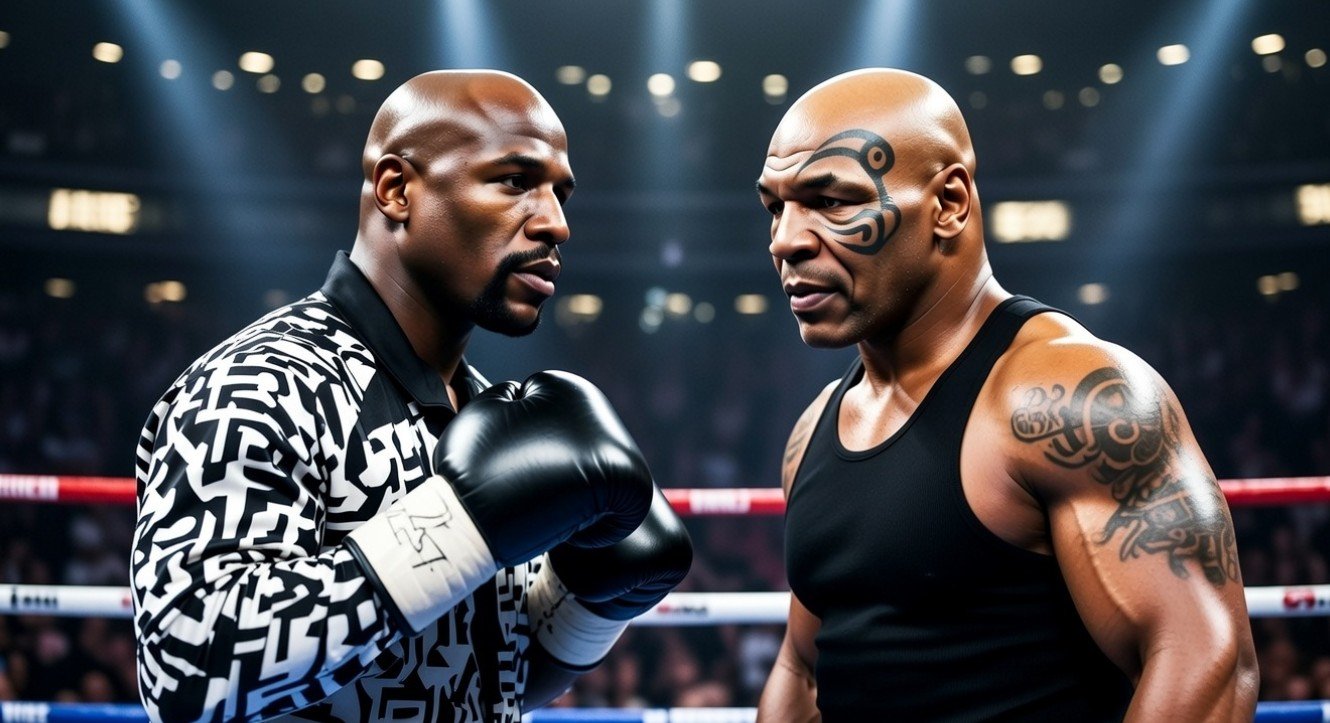
Mayweather v Tyson Career Earnings
But context matters: Tyson fought in an era with lower PPV tech and fewer global outlets, while Mayweather benefited from the digital boom and crossover events.
Still, facts are facts – Mayweather’s strategic approach turned him into boxing’s first billionaire athlete. And with their upcoming exhibition this year adding potentially massive paydays once more, it shows these two are still cashing in big time.
To visualize that, here’s a quick table comparing the overall totals:
| Boxer | Career Span | Total Earnings (million USD) | Key Notes |
|---|---|---|---|
| Floyd Mayweather | 1996-2017 | 1100 | Includes major PPV upside |
| Mike Tyson | 1985-2005 | 400 | Front-loaded with heavyweight hype |
See how Mayweather towers over Tyson there? It’s not just the numbers; it’s how he structured deals to take the lion’s share.Breaking down the big paydays, let’s look at tables for each. First, Mayweather’s top earners:
| Rank | Opponent | Year | Purse (million USD) |
|---|---|---|---|
| 1 | Conor McGregor | 2017 | 275 |
| 2 | Manny Pacquiao | 2015 | 250 |
| 3 | Canelo Alvarez | 2013 | 80 |
| 4 | Oscar De La Hoya | 2007 | 52 |
| 5 | Miguel Cotto | 2012 | 45 |
| 6 | Victor Ortiz | 2011 | 40 |
| 7 | Marcos Maidana II | 2014 | 40 |
| 8 | Robert Guerrero | 2013 | 32 |
| 9 | Marcos Maidana I | 2014 | 32 |
| 10 | Ricky Hatton | 2007 | 25 |
Those figures include guarantees and PPV upside, showing how Mayweather’s later fights dwarfed the early ones.For Tyson:
| Rank | Opponent | Year | Purse (million USD) |
|---|---|---|---|
| 1 | Evander Holyfield I | 1996 | 30 |
| 2 | Evander Holyfield II | 1997 | 30 |
| 3 | Frank Bruno II | 1996 | 30 |
| 4 | Bruce Seldon | 1996 | 30 |
| 5 | Peter McNeeley | 1995 | 25 |
| 6 | Michael Spinks | 1988 | 22 |
| 7 | Lennox Lewis | 2002 | 17 |
| 8 | Francois Botha | 1999 | 10 |
| 9 | Buster Douglas | 1990 | 6 |
| 10 | Trevor Berbick | 1986 | 1.5 |
Tyson’s purses were massive for the time, but flat compared to Mayweather’s escalation.Here’s a table comparing Mayweather’s top five paydays:
| Rank | Opponent | Year | Purse (million USD) |
|---|---|---|---|
| 1 | Conor McGregor | 2017 | 275 |
| 2 | Manny Pacquiao | 2015 | 250 |
| 3 | Canelo Alvarez | 2013 | 80 |
| 4 | Oscar De La Hoya | 2007 | 52 |
| 5 | Miguel Cotto | 2012 | 45 |
And for Tyson’s top five:
| Rank | Opponent | Year | Purse (million USD) |
|---|---|---|---|
| 1 | Evander Holyfield I | 1996 | 30 |
| 2 | Evander Holyfield II | 1997 | 30 |
| 3 | Frank Bruno II | 1996 | 30 |
| 4 | Bruce Seldon | 1996 | 30 |
| 5 | Peter McNeeley | 1995 | 25 |
It’s clear – Mayweather’s peaks are on another level, thanks to PPV evolution and his business acumen.Diving deeper, what factors drove these earnings? For Tyson, it was pure spectacle – the youngest champ, the knockouts, the aura of invincibility.
His fights generated huge gates, like $17.4 million for Spinks, but he often took flat purses without big PPV cuts. Mayweather flipped the script, promoting via Golden Boy then his own Mayweather Promotions, taking 70-80% of revenues.
His PPV numbers: 4.6 million for Pacquiao, 4.3 million for McGregor, generating billions in total revenue. Tyson’s PPV high was 1.99 million for Holyfield II, good for the 90s but dwarfed today.
Endorsements played a part too. Tyson had deals with Pepsi and Nintendo, adding $50 million over his career, but legal issues cut that short.
Mayweather had Hublot, Burger King, adding tens of millions annually. Post-ring, both did exhibitions: Tyson $20 million for recent ones, Mayweather $50 million+.
And with their 2026 exhibition set to be another blockbuster, expect those figures to climb even higher. But Mayweather’s brand kept paying – he’s worth hundreds of millions net now, Tyson recovered from bankruptcy.
Comparing eras, Tyson’s $400 million in the 80s/90s equates to more in today’s dollars in some ways, but even adjusted, Mayweather edges it with smarter deals. Tyson lost fortunes to bad management; Mayweather invested wisely.
In the end, Mayweather comes out on top in raw earnings, but Tyson’s impact on boxing’s popularity paved the way – and now with them facing off in that exhibition this year, it’s a full-circle moment for two absolute giants.
Both legends, different times, same game – turning fists into fortunes.
Don’t forget to also check out our Mayweather v Pacquiao career comparison as well.
As well, don’t forget to check out our latest boxing news.